"Walter Pater was a Bohemian author and philosopher. His philosophy emphasizes the function of art in the creation of culture and is often referred to as aestheticism. He is a English poet of the nineteenth century, was a critic of sorts. He wrote in the style of a literary reader, taking the reader through a long poem or essay to show how he felt about any particular topic. In his essay on style, Pater does just that. ‘Style is the passion with which the soul strives after a purpose, a mark of distinction, a characteristic of itself.”...
THE consulting–rooms of Dr Orion Hood, the eminent criminologist and specialist in certain moral disorders, lay along the sea–front at Scarborough, in a series of very large and well–lighted french windows, which showed the North Sea like one endless outer wall of blue–green marble. In such a place the sea had something of the monotony of a blue–green dado: for the chambers themselves were ruled throughout by a terrible tidiness not unlike the terrible tidiness of the sea. It must not be supposed that Dr Hood's apartments excluded luxury, or even poetry....
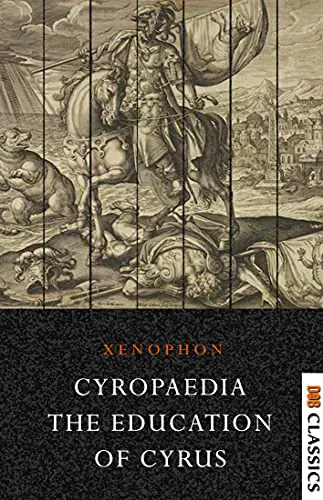
In substance, the Cyropaedia is "a political romance, describing the education of the ideal ruler, trained to rule as a benevolent despot over his admiring and willing subjects." Although it is "generally agreed" that Xenophon "did not intend Cyropaedia as history", it remains unclear whether this work was intended to fit into any other classical genre known before....
SeaWolf Press is proud to offer another book in its Jack London 100th Anniversary Collection. Each book in the collection contains the text, illustrations, and cover from the first edition (but it is not just a photocopy.) Use Amazon's Lookinside feature to compare this edition with others. You'll be impressed by the differences. Our version has: Text that has been proofread to avoid errors common in other versions. A beautiful cover that replicates the first edition cover. The complete text in an easy-to-read font similar to the original. Properly formatted text complete with correct...
The standard economics textbook for more than a generation, John Stuart Mill’s Principles of Political Economy (1848) was really as much a synthesis of his predecessors’ ideas as it was an original economic treatise. Heavily influenced by the work of David Ricardo, and also taking ideas from Adam Smith and Thomas Malthus, Mill systematically demonstrated how important economic concepts could be applied to real-world situations. In his emphasis on realism, Mill thus took economics out of the realm of the abstract and placed it squarely within the context of society. For instance, he made a...
THE following remarks on the study of Celtic Literature formed the substance of four lectures given by me in the chair of poetry at Oxford. They were first published in the Cornhill Magazine, and are now reprinted from thence. Again and again, in the course of them, I have marked the very humble scope intended; which is, not to treat any special branch of scientific Celtic studies (a task for which I am quite incompetent), but to point out the many directions in which the results of those studies offer matter of general interest, and to insist on the benefit we may all derive from knowing the...
In or about the year 2000, humanity has reached "that incredibly lofty goal to which its intrinsic efforts can carry it" — but rejected everything but crass materialism. Technology has advanced to the point where no one need work for a living, while the social sciences have achieved a smoothly-running if almost unbearably sterile social order. Formal religious beliefs except for Catholicism have been uprooted and eliminated as coherent systems, and the Catholic Church has been completely discredited in the eyes of the world, finally being outlawed. The result is everything the late Victorians...
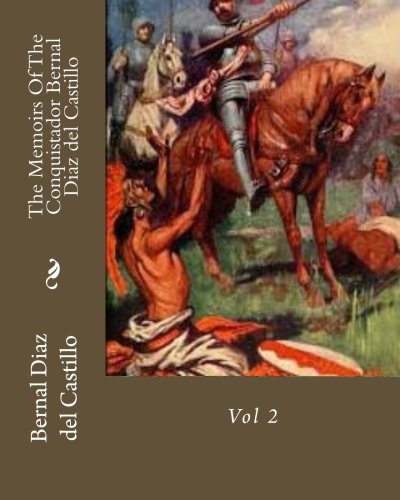
How the whole of us marched towards Tezcuco, and what happened to us on our way there. When Cortes found himself so well provided again with muskets, powder, crossbows, and horses, and observed how impatient the whole of us, officers as well as soldiers, were to commence the siege of the great city of Mexico, he desired the caziques of Tlascalla to furnish him with 10,000 of their troops to join us in the campaign of Tezcuco, as this was one of the largest towns of New Spain, and next in importance to Mexico. The elder Xicotencatl (now called Don Lorenzo de Vargas) assured him that not only...
Excerpt from The Memoirs of the Conquistador Bernal Diaz Del Castillo, Vol. 2 of 2: Containing a True and Full Account of the Discovery and Conquest of Mexico and New Spain Chap. CXXXIX. How ambassadors arrive in Tezonco from three neighbouring townships, to sue for peace, and to beg forgiveness for the murder of several Spaniards who had fallen into their hands; and how Sandoval marched to Chalco and Tlalmanalco, to assist the inhabitants there against the Mexicans 8. About the Publisher Forgotten Books publishes hundreds of thousands of rare and classic books. Find more at...
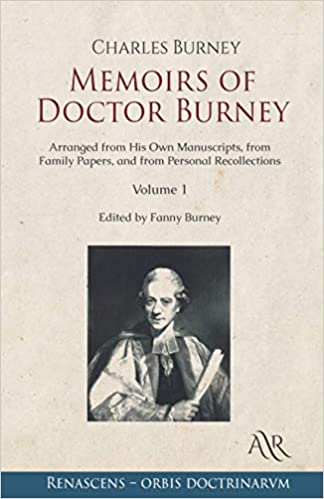
Charles Burney (1726–1814), the music historian, is best remembered for his General History of Music and the accounts of his musical tours in Europe. He was a friend of Samuel Johnson and David Garrick, corresponded with Diderot and Haydn and was made Fellow of the Royal Society in 1773. Although he was a music teacher by profession, it was his writings on music which brought him widespread recognition. Following publication of the General History, he began his memoirs but did not complete them. It is likely that he intended his daughter, the novelist Fanny Burney, to publish the memoirs...
Designed to provide in a series of volumes, each complete in itself, the cream of our national humor, contributed by the masters of comic draughtsmanship and the leading wits of the age to "Punch," from its beginning in 1841 to the present day...
Passed along for centuries through oral tradition by the followers of Buddhism, “The Dhammapada” is a collection of sayings by Buddha which concisely presents the religion’s core philosophies....
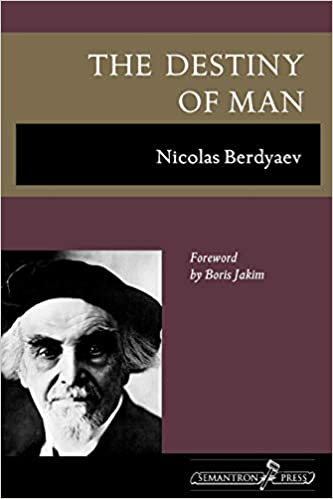
In The Destiny of Man, Nikolai Berdyaev sketches the plan of a new ethics. This new ethics will be knowledge not only of good and evil, but also of the tragedy which is constantly present in moral experience and complicates all of man's moral judgments. It will emphasize the crucial importance of the personality and of human freedom. The new ethics will interpret moral life as a creative activity; it will be an ethics of free creativeness, an ethics that combines freedom, compassion, and creativeness....
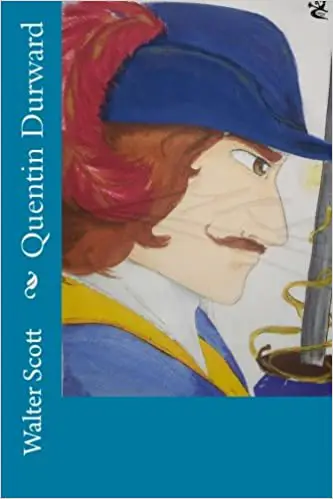
Quentin Durward, novel of adventure and romance by Sir Walter Scott, published in 1823. The novel was a popular success and solidified Scott’s reputation as a stirring writer. The novel is set in 15th-century France, where the title character saves the life of Louis XI, protects and falls in love with Countess Isabelle de Croye (a Burgundian heiress), helps defeat the king’s brutal enemy, and wins Isabelle’s hand in marriage....
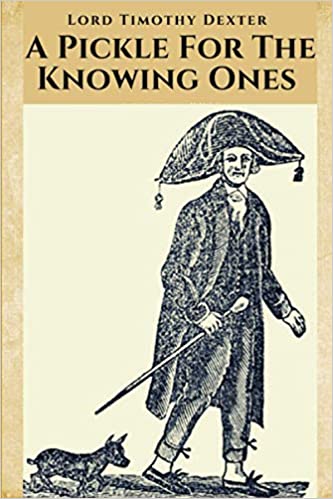
"Pickle"--- as this digest is commonly known --- is a collection of correspondence and chronicles penned by Dexter and first self-published as an anthology in May of 1802. Dexter was a well-known eccentric of the time period. A Pickle for the Knowing Ones or Plain Truths in a Homespun Dress is an autobiographical book published in 1802. The author, Lord Timothy Dexter, was an eccentric American businessman who got rich by making a series of horrible business decisions that, due to luck, turned out to be extremely profitable. The book has no punctuation and capitalization is seemingly random...