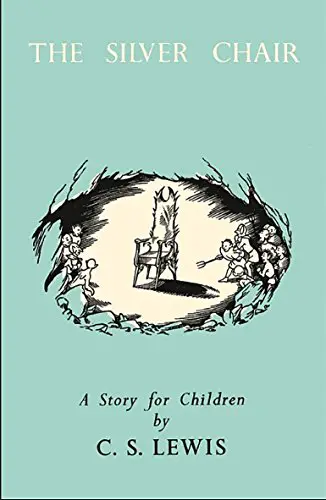
King Caspian is now well on in years, and has a son and heir, Prince Rilian. Rilian, however, disappeared from Narnia under mysterious and sinister circumstances, and has been missing for some years. He must be found. Clive Staples or C.S. Lewis (1898-1963) was a British literary scholar and novelist. He was a fellow of Magdalen College, a prestigious school at Oxford University. His strong religious background influenced such books as "The Problem of Pain" and "The Screwtape Letters". He is better known for his adult science fiction trilogy: "Out of a Silent Planet", "Perelandra", and "That...
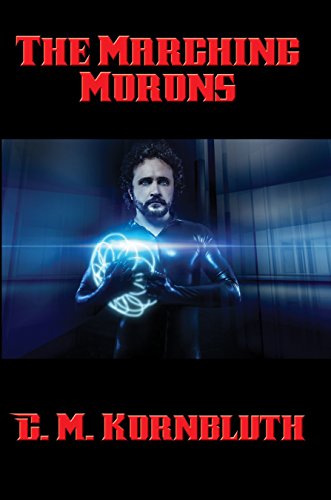
"The Marching Morons" is a look at a far future in which the world's population consists of five billion idiots and a few million geniuses—the precarious minority of the "elite" working desperately to keep things running behind the scenes. In his introduction to The Best of C.M. Kornbluth, Pohl states that "The Marching Morons" is a direct sequel to "The Little Black Bag": it is easy to miss this, as "Bag" is set in the contemporary present while "Morons" takes place several centuries from now, and there is no character who appears in both stories. The titular black bag in the first story is...
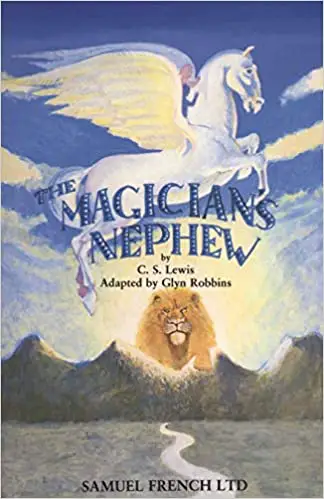
"It is a very important story," Professor Lewis comments, "because it shows how all the comings and goings between our own world and the land of Narnia first began." Two children, Polly and Digory, are spending their summer in London. But a chance encounter with Digory's Uncle Andrew takes them far from that city... C.S. Lewis (1898-1963) was a British literary scholar and novelist. He was a fellow of Magdalen College, a prestigious school at Oxford University. His strong religious background influenced such books as "The Problem of Pain" and "The Screwtape Letters". He is better known for...
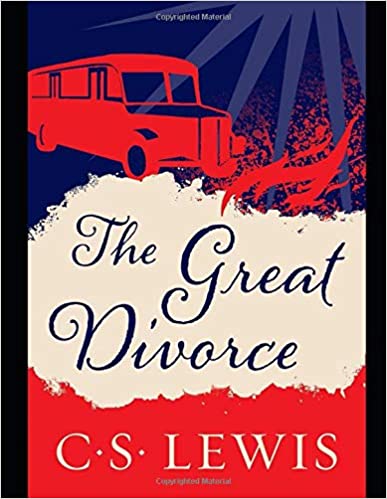
The Great Divorce is a theological dream vision by C. S. Lewis, in which he reflects on the Christian conception of Heaven and Hell. Clive Staples or C.S. Lewis (1898-1963) was a British literary scholar and novelist. He was a fellow of Magdalen College, a prestigious school at Oxford University. His strong religious background influenced such books as "The Problem of Pain" and "The Screwtape Letters". He is better known for his adult science fiction trilogy: "Out of a Silent Planet", "Perelandra", and "That Hideous Strength". This series is heavily influenced by Christian thinking and was...
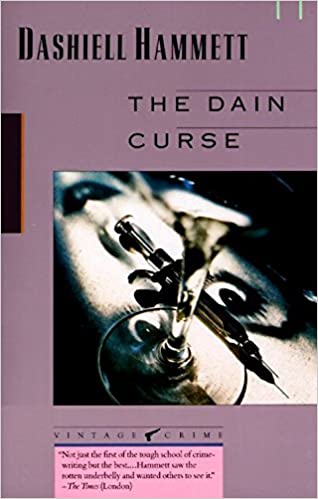
The detective known only as The Continental Op investigates a theft of diamonds from the Leggett family of San Francisco. The plot involves a supposed curse on the Dain family, said to inflict sudden and violent deaths upon those in their vicinity. Edgar Leggett's wife is a Dain, as is his daughter Gabrielle Leggett. The detective untangles a web of robberies, lies and murder. It is discovered that Gabrielle Leggett is also involved in a mysterious religious cult and is addicted to drugs....
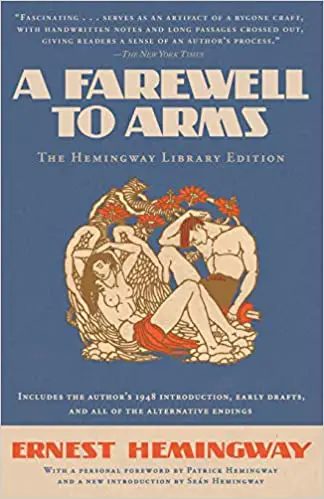
A Farewell to Arms is a novel by Ernest Hemingway set during the Italian campaign of World War I. The book, published in 1929, is a first-person account of American Frederic Henry, serving as a Lieutenant ("Tenente") in the ambulance corps of the Italian Army. The title is taken from a poem by 16th-century English dramatist George Peele. A Farewell to Arms is about a love affair between the expatriate American Henry and Catherine Barkley against the backdrop of the First World War, cynical soldiers, fighting and the displacement of populations. The publication of A Farewell to Arms cemented...
Dr. Montague, a scientific investigator of ghostly phenomena, has chosen to live for several weeks at Hill House, by repute a place of horror that will brook no human habitation. To check and contribute to his observations, he selects three companions previously unknown to him; two girls, Theo and Eleanor, and Luke, a young man, who is heir to Hill House. What happens cannot, in fairness, be told. But Dr Montague’s words were prophetic: ‘A ghost cannot hurt anyone; only the fear of ghosts can be dangerous.’ Whether the ghosts at Hill House caused the fear, or the fear created the ghosts,...
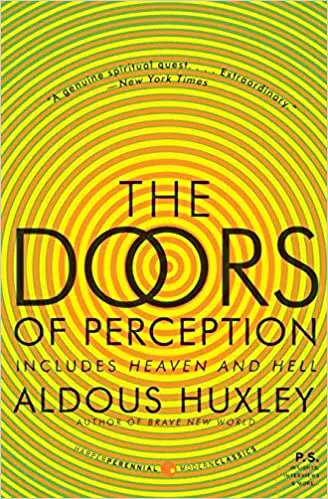
Published in 1954, it elaborates on his psychedelic experience under the influence of mescaline in May 1953. Huxley recalls the insights he experienced, ranging from the "purely aesthetic" to "sacramental vision", and reflects on their philosophical and psychological implications.—Wikipedia. Aldous Leonard Huxley (26 July 1894 – 22 November 1963) was an English writer, novelist, philosopher and a prominent member of the Huxley family. He was best known for his novels including Brave New World, set in a dystopian London, and for non-fiction books, such as The Doors of Perception, which...
Adeline Virginia Woolf (née Stephen; 25 January 1882 – 28 March 1941) was an English writer and one of the foremost modernists of the twentieth century. During the interwar period, Woolf was a significant figure in London literary society and a central figure in the influential Bloomsbury Group of intellectuals. Her most famous works include the novels Mrs Dalloway (1925), To the Lighthouse (1927) and Orlando (1928), and the book-length essay A Room of One's Own (1929), with its famous dictum, "A woman must have money and a room of her own if she is to write fiction." Woolf suffered from...
The Sound and the Fury is a novel written by the American author William Faulkner. It employs a number of narrative styles, including the technique known as stream of consciousness, pioneered by 20th-century European novelists such as James Joyce and Virginia Woolf. Published in 1929, The Sound and the Fury was Faulkner's fourth novel, and was not immediately successful. In 1931, however, when Faulkner's sixth novel, Sanctuary, was published—a sensationalist story, which Faulkner later claimed was written only for money—The Sound and the Fury also became commercially successful, and Faulkner...
Silent Spring by Rachel Carson is an environmental science book documenting the detrimental effects of pesticide aerial spraying on the environment and the long-term effects on animal and human health. Its publication led to a U.S. ban on DDT and inspired an environmental movement that led to the creation of the U.S. Environmental Protection Agency. Rachel Carson, writer, scientist, and ecologist, grew up simply in the rural river town of Springdale, Pennsylvania. Her mother bequeathed to her a life-long love of nature and the living world that Rachel expressed first as a writer and later as...
As I Lay Dying is Faulkner's harrowing account of the Bundre family's odyssey across the Mississippi countryside to bury Addie, their wife and mother. Told in turns by each of the family members—including Addie herself—the novel ranges in mood from dark comedy to the deepest pathos. William Cuthbert Faulkner (September 25, 1897 – July 6, 1962) was an American writer and Nobel Prize laureate from Oxford, Mississippi. Faulkner wrote novels, short stories, a play, poetry, essays, and screenplays. He is primarily known for his novels and short stories set in the fictional Yoknapatawpha County,...
Private investigator Philip Marlowe is 42 years old and does not exercise. His sport is chess yet he does not play against anybody. He just replays games of chess masters and solves chess puzzles. His brushes with danger and death he just narrates matter-of-factly. In one scene a rich, powerful, mean-spirited guy comes to his office. After some tough guy dialogue Marlowe slugs the visitor which made the latter double up in pain while his bodyguard--certainly armed--is just outside. When Marlowe later meets the bodyguard he insults him on his face. Yet they left Marlowe unharmed. Marlowe...
Plath's only novel, but a famous one, with strong elements of autobiography. It is 1953, and Esther Greenwood has just arrived in New York City: she and eleven others have won a contest, the prize being one month of employment at a famous fashion magazine. But afterwards, depression sets in... Sylvia Plath (October 27, 1932 – February 11, 1963) was an American poet, novelist, and short-story writer. Born in Boston, she studied at Smith College and Newnham College at the University of Cambridge before receiving acclaim as a poet and writer. She married fellow poet Ted Hughes in 1956, and they...
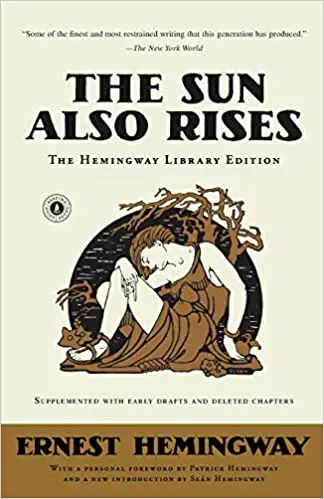
On the surface, the novel is a love story between the protagonist American Jake Barnes—a man whose war wound has made him impotent—and the promiscuous divorcée Lady Brett Ashley. Brett's affair with Robert Cohn causes Jake to be upset and break off his friendship with Cohn; her seduction of the 19-year-old matador Romero causes Jake to lose his good reputation among the Spaniards in Pamplona. Ernest Hemingway (1899-1961) was an American writer of novels and short stories. Born in Chicago, he was grew up in the prosperous suburb of Oak Park. Excelling in English at school, he became a junior...